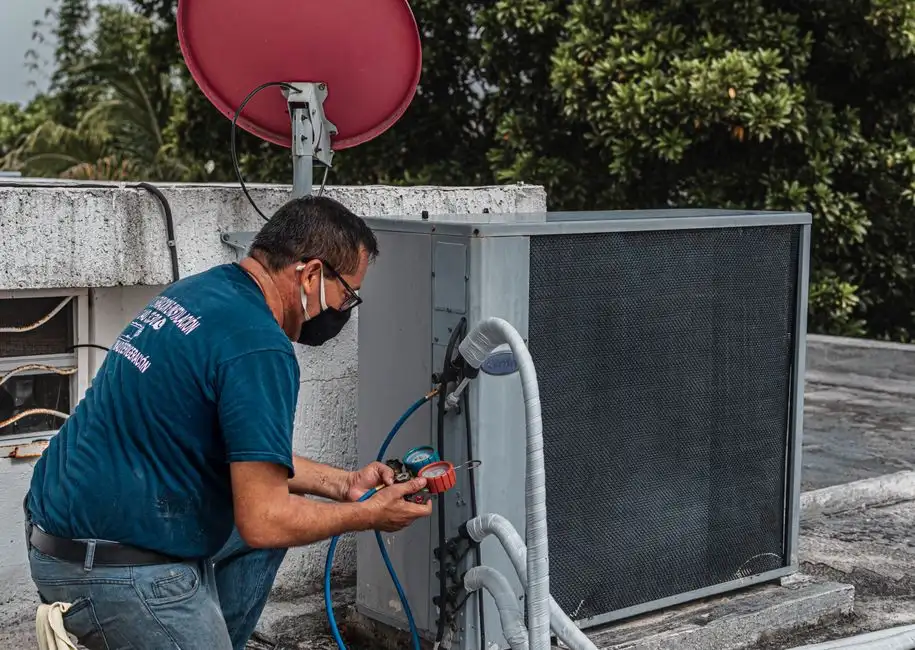
Cleaning your AC drain line takes about 15 minutes with a wet/dry vacuum, a cup of distilled white vinegar, and a funnel. You shut off the system at the thermostat, find the PVC drain stub outside near the condenser, suck the clog out from that end, then flush the line with vinegar and water. That routine stops the overflow that shuts down Orlando systems every summer.
AC condensate drain cleaning Orlando homeowners do themselves is one of the cheapest maintenance habits you can build. This guide covers why our humidity makes clogs so common, the exact steps, how often to repeat them, and the warning signs that mean you should stop and call us instead.
Why AC drain lines clog so fast in Orlando
Orlando's AC drain lines clog faster than almost anywhere else in the country because your system runs nine or ten months a year and pulls pints of water out of the air every single day. An air handler moving 1,200 CFM in a 75°F home with 60% outdoor humidity can condense 15 to 20 gallons of water daily during July and August. All of that water exits through a 3/4-inch PVC pipe.
That pipe is a perfect breeding ground for biological growth. Dust, pollen, and skin cells blow off the evaporator coil and land in the drain pan. Mixed with warm standing water, they form a slimy biofilm that sticks to the inside of the pipe. It builds up a millimeter at a time until the line narrows to a pinhole - then closes completely.
Newer construction has its own quirks. Homes built in the last decade, especially across HVAC in Lake Nona, often use high-efficiency air handlers that produce more condensate than older units. Tightly sealed attics trap heat, so the pan sits in 130°F air and the water evaporates and re-condenses, leaving mineral deposits behind. We pull more clogged drain lines out of 2018-and-newer homes than we do out of 1990s builds.
Two other culprits show up constantly:
- Algae and mold - pink or black slime visible in the pan or at the drain stub.
- Insulation and debris - fiberglass from a deteriorating pan liner, or attic dust that falls into an open pan.
Once the line clogs, water backs into the pan. If your float switch works, it shuts the system down. If it doesn't, water overflows into the ceiling, the closet, or the hallway. That's when a $15 maintenance task turns into a $1,800 drywall and paint job.
How do I clean my AC drain line in Orlando?
You clean an AC drain line by pulling the clog out from the exterior stub with a wet/dry vacuum, then flushing the line with vinegar and hot water from the indoor access point. Here's the full sequence we use on service calls, adapted for a homeowner with basic tools.
What you'll need
- Wet/dry shop vacuum with a 5/8-inch or 3/4-inch hose adapter
- Distilled white vinegar (one cup)
- Funnel or a small pitcher
- Bucket and towels
- Flashlight
- Gloves
Step-by-step
- Shut the system off. Set the thermostat to OFF and flip the breaker at the air handler. You do not want the unit running while you're working around the pan.
- Find the drain pan and the access tee. The pan sits under the indoor coil. Look for a vertical PVC stub with a cap - that's your cleanout tee. If you don't have one, you'll work from the exterior stub only.
- Locate the exterior drain stub. Go outside near the condenser. The pipe usually terminates 6 to 12 inches above the ground, often near a flower bed or the side of the house.
- Vacuum from the outside. Attach the shop vac hose to the exterior stub and run it for 60 to 90 seconds. You'll hear the clog break loose. This is the single most effective step.
- Flush from the inside. Remove the cap on the cleanout tee, pour one cup of distilled white vinegar down the line, wait 30 minutes, then follow with a gallon of hot (not boiling) water.
- Check the pan. Look for standing water. If the pan is dry and the line drains freely, you're done.
- Restore power and test. Turn the breaker back on, set the thermostat to COOL, and let the system run 20 minutes. Confirm water is dripping steadily from the exterior stub.
If the line still backs up after two vacuum-and-flush cycles, stop. You're either dealing with a hard mineral blockage or a cracked line, and both need a pro. Our AC repair Orlando FL team clears drain lines and checks the pan, float switch, and slope in one visit.
How often should I clean my AC drain line in Orlando FL?
Clean your AC drain line every three months in Orlando - March, June, September, and December - and add a vinegar flush once a month during June through September. That's the schedule we recommend to every customer, and it's tighter than the national advice you'll find online because our cooling season is longer and our humidity is higher.
Here's how the calendar breaks down for Central Florida:
- March: Full vacuum and flush before the first 90°F day.
- June: Full clean at the start of peak season. Add monthly vinegar flushes from here through September.
- September: Full clean as the rainy season winds down. This is when biofilm growth peaks.
- December: Full clean and pan inspection before the cooler, drier months.
Homes with pets, smokers, or anyone with allergies should go to a two-month interval. More dust in the return air means more debris in the pan. If you've had a clog in the last 12 months, drop to every other month permanently.
Pairing drain line cleaning with a full AC tune up Orlando twice a year covers the coil cleaning, refrigerant check, and float switch test that keep the whole system healthy. Most of the clogged-line calls we run in July started as a maintenance item somebody skipped in March.
Can I use vinegar to clean my AC drain line?
Yes - distilled white vinegar is the best routine treatment for an AC drain line, and it's what we use on most maintenance visits. Its acidity (around 5%) breaks down the biofilm and algae that cause clogs without damaging PVC, and it's safe to pour down the cleanout tee while the system is off.
What vinegar will not do is clear an existing hard clog. If water is already backing up into the pan, vinegar sits on top of the blockage and does nothing. Vacuum first, then vinegar.
A few rules we follow:
- Use distilled white vinegar only. Apple cider and cleaning vinegar leave residue.
- Never mix vinegar with bleach. The combination releases chlorine gas.
- Skip the drain tablets sold at big-box stores. They dissolve unevenly and can leave a chalky residue that makes the next clog worse.
- One cup, once a month, is plenty. More frequent use won't hurt the pipe, but it won't help either.
If you want a stronger routine treatment, a quarter-cup of hydrogen peroxide alternated with vinegar works well. Just don't combine them in the same pour.
Common mistakes that make clogs worse
The most common mistake is pouring chemical drain cleaner down an AC drain line. Those products are formulated for kitchen and bathroom drains, and they can melt the PVC cement at the joints or crack the pan. We've replaced two pans this year because of it.
Other mistakes we see on almost every DIY call:
- Running the system during the clean. Water keeps flowing into the pan while you work, and you can't tell if the line is actually clear.
- Vacuuming from the inside only. The clog usually sits at the exterior stub or in the trap. Pull from the outside first.
- Ignoring the float switch. Test it by lifting the float with the system running. If the unit doesn't shut off, the switch is dead and you have no backup protection.
- Not checking the slope. The drain line needs a quarter-inch of fall per foot. A sagging line pools water and clogs every time.
- Forgetting the secondary pan. If your system has an auxiliary pan under the main one, it has its own drain. Clean both.
One more: don't tape over a cracked pan or patch a leaking drain line with silicone. It holds for a month, then fails on the hottest weekend of the year. Replace the part.
If you're seeing water where it shouldn't be - ceiling stains, wet carpet near the air handler, or a pan that refills within an hour - that's an emergency AC repair Orlando FL situation. Shut the system down and call us.
When to call a professional
Call a pro when the line won't clear after two vacuum-and-flush attempts, when you see water damage anywhere outside the pan, or when the clog returns within 30 days. Those three signals mean the problem is structural - a cracked line, a mis-sloped run, a failing pan, or a coil that's shedding debris faster than the drain can carry it.
We also get called for clogs we can't reach from the exterior stub. Long horizontal runs, lines buried in slab, and second-floor air handlers with a condensate pump all need a technician with a gallo gun or a pressurized flush. Trying to force those clear with a shop vac can push the clog further down the line.
Our team handles this every day across Orlando. We clear the line, inspect the pan and float switch, check the slope, and confirm the system drains properly before we leave. If you're in one of the older neighborhoods where attic runs are long and pans are original to the house - like the 1950s bungalows around College Park HVAC territory - we'll also flag anything that's likely to fail in the next year so you're not surprised in August.
For a full-system check that includes drain line service, coil cleaning, and refrigerant verification, our hvac services orlando page covers everything we do. Pricing is upfront before we start.
Frequently Asked Questions
How do I clean my AC drain line in Orlando?
Shut the system off, vacuum the exterior drain stub with a wet/dry shop vac for 60-90 seconds, then pour one cup of distilled white vinegar and a gallon of hot water down the cleanout tee. Run the system 20 minutes and confirm water drips freely outside.
How often should I clean AC drain line in Orlando FL?
Every three months - March, June, September, and December - plus a monthly vinegar flush from June through September. Homes with pets or allergy sufferers should clean every two months. Orlando's long cooling season makes the standard annual advice too infrequent here.
What causes AC drain line clog in Orlando Florida?
Biofilm, algae, and dust that mix with condensate in the drain pan. Orlando's 60%+ summer humidity and nine-month cooling season produce 15-20 gallons of condensate daily, giving biological growth the warm, wet environment it needs to clog a 3/4-inch line in weeks.
Can I use vinegar to clean AC drain line in Orlando?
Yes. One cup of distilled white vinegar down the cleanout tee once a month prevents most clogs. It won't clear an existing blockage - vacuum first. Never mix vinegar with bleach, and skip store-bought drain tablets.
Should I call an HVAC pro for AC drain clog in Orlando?
Call a pro if the line won't clear after two attempts, if water is escaping the pan, or if the clog returns within 30 days. Those point to a cracked line, bad slope, or failing pan that DIY cleaning can't fix.
Get help with HVAC in Orlando
If your drain line is clogged, your pan is overflowing, or you'd rather have someone handle the whole maintenance checklist twice a year, we're ready to help.
Call Orlando HVAC Air Conditioning at 689 315 0679. We'll clear the line, test the float switch, and make sure your system is draining the way it should before we leave.