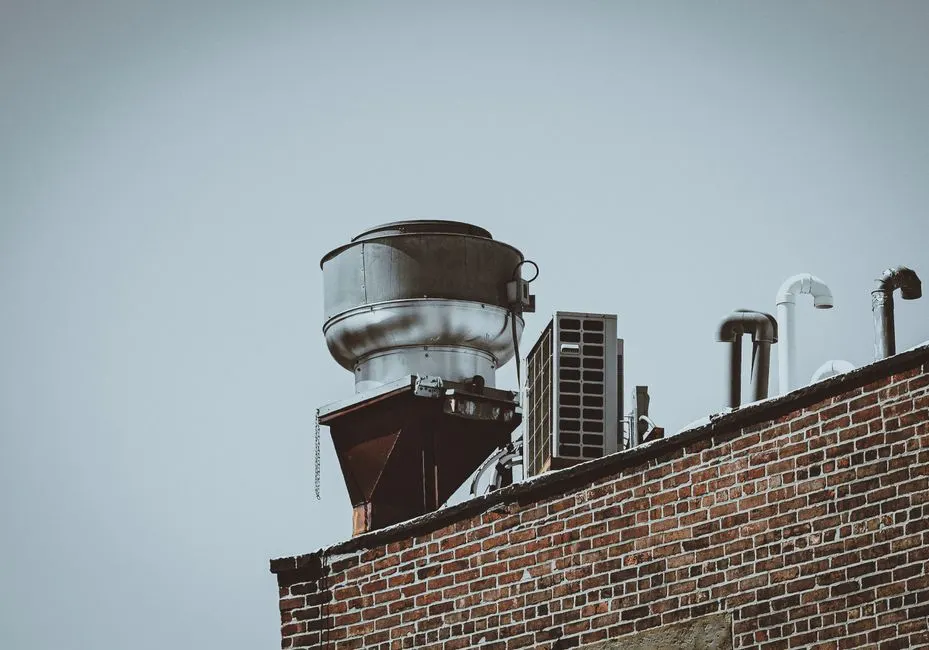
A commercial HVAC maintenance checklist for Orlando businesses covers four things: monthly filter and drain checks, quarterly coil and belt inspections, a full pre-summer tune-up before the June heat, and a pre-winter check on heating and reversing valves. Run all four and you cut emergency breakdowns dramatically, because most rooftop unit failures here start as a clogged drain line or a dirty condenser coil, not a dead compressor.
That is the short answer. The rest of this post is the working version we use on commercial accounts across Orlando - what to check, when to check it, what it costs in 2026, and which items you can hand to your own staff versus which ones need a licensed tech on the roof.
What belongs on a commercial HVAC maintenance checklist in Orlando
Commercial HVAC maintenance in Orlando is scheduled service work on the equipment that heats and cools a business - rooftop packaged units, split systems, mini-splits, and the ductwork and controls connected to them - performed on a recurring calendar rather than after something breaks.
The checklist itself is not exotic. It is the same 20-odd items on every commercial account, done in the same order, logged every visit. What changes is how often you do them, because Orlando runs its cooling systems roughly 9 to 10 months a year and rarely gives equipment a real off-season.
Here is the core list we work from:
- Filters: inspect and replace on a set interval, not when someone remembers.
- Condensate drain pan and line: flush, check the trap, verify the float switch kills the unit when the pan fills.
- Condenser and evaporator coils: clean and straighten fins; Orlando pollen and summer thunderstorms load these fast.
- Blower motor and belt: amp-draw reading, belt tension and wear, bearing noise.
- Refrigerant charge: superheat and subcooling readings, not just a pressure glance.
- Electrical: contactors, capacitors, disconnect, torque on lugs, control wiring.
- Thermostat and controls: calibration, setpoint schedule, economizer operation.
- Ductwork: visible leaks, disconnected flex runs, damaged insulation in the attic.
- Cabinet and curb: panel screws, gaskets, hail or storm damage, standing water on the roof.
- Heating side: heat strips, gas heat exchanger, reversing valve on heat pumps.
If you run a restaurant, salon, or medical office, add exhaust and make-up air to the list. Those systems fail separately from the AC and they are usually the reason a space smells wrong or a health inspection goes sideways.
How often should Orlando businesses service their HVAC systems?
Twice a year is the floor for a small Orlando business, and four times a year is normal for anything with heavy occupancy, kitchen grease, or 24-hour operation. Because we cool almost year-round, the spring and fall visits carry most of the weight, and the summer visit is really a mid-season check to catch what the heat has done.
Here is how we schedule commercial accounts in Central Florida:
- Small office, retail, salon (under 5 tons): 2 visits per year - one in March or April, one in October.
- Restaurant, medical office, gym, daycare: 4 visits per year - quarterly, with filter changes monthly.
- Multi-tenant or 24/7 operation: 4 to 6 visits per year, plus a filter contract.
- Units over 15 years old: add a mid-summer inspection regardless of size.
Filter changes are the exception to the visit schedule. A restaurant on Orange Avenue running 12 hours a day needs filters swapped every 3 to 4 weeks in summer. A professional office on the fourth floor of a Downtown Orlando building can stretch to 60 days. We set the interval by measured static pressure, not by the calendar on the wall.
If you want the same discipline on the residential side, our team runs AC maintenance Orlando FL on the same seasonal rhythm for homes and small commercial spaces.
The monthly walkthrough: what your own staff can check
Your office manager or facility lead can catch about 60% of the problems that turn into emergency calls, and it takes 15 minutes. This is the part of the checklist that does not need a technician, a gauge manifold, or a ladder.
Walk the building once a month and look for these:
- Water in the drain pan or staining on the ceiling tile under a unit.
- Filters that are gray, matted, or visibly bowed.
- Thermostat reading that does not match what the space feels like.
- Any unit short-cycling - starting and stopping every few minutes.
- Unusual noise: rattling, grinding, or a whistle at a return grille.
- Ice on the refrigerant lines or the indoor coil.
- Doors and windows that no longer seal, which quietly overload the system.
Write it down. A log with dates is the difference between "the AC has been weird for a while" and "it started making noise on the 14th." That log also tells us whether a problem is a one-time event or a pattern, which saves diagnostic time on the invoice.
Seasonal tasks: what changes from November through summer
November is the one month in Orlando where the checklist flips. Cooling load drops, heating load is still light, and this is the window to do the work that is impossible in July - coil cleaning, duct repair, and anything that requires shutting a unit down for a few hours.
Late fall and winter (November through February)
Run the heating side under load before you need it. Heat strips, gas heat exchangers, and heat pump reversing valves all fail quietly in the off-season and announce themselves on the first cold morning. We test each one, check the defrost cycle, and clean the coils while the building is comfortable.
Spring (March through May)
This is the pre-summer tune-up and it is the single most valuable visit of the year. Full coil cleaning, refrigerant charge verification, capacitor testing, belt replacement, drain flush, and a controls check. A unit that goes into June with a dirty condenser coil runs 10 to 15 degrees hotter and pulls noticeably more amps.
Summer (June through September)
Mid-season, we are looking for heat damage: swollen capacitors, burnt contactors, refrigerant loss from vibration, and drain lines that have grown algae in the standing water. Orlando's afternoon storms also drop debris on rooftop units, so we clear the cabinets and check the curb flashing.
Businesses in older buildings around Winter Park HVAC territory deal with a specific version of this - original ductwork from the 1960s and 70s that leaks 20% to 30% of its air into the attic before it ever reaches the register. Sealing that ductwork is often cheaper than upsizing the unit.
What commercial HVAC maintenance costs in Orlando in 2026
Typical 2026 pricing in Orlando runs $150 to $350 per rooftop unit for a single tune-up visit, or $600 to $1,800 per year per unit on a service contract that covers two to four visits. The spread comes down to tonnage, roof access, and how many units you have.
What we see on real invoices:
- Single small commercial unit (3-5 tons), one tune-up: $150-$250.
- Restaurant rooftop unit (7.5-10 tons), one tune-up: $250-$400.
- Annual contract, 1-3 units, 2 visits: $600-$1,200.
- Annual contract, 4-10 units, 4 visits: $1,800-$4,500.
- Filter contract (monthly changes, standard sizes): $25-$60 per filter installed.
- Coil cleaning add-on when grease or pollen is heavy: $200-$500 per unit.
Compare that to a mid-summer compressor replacement on a 10-ton rooftop unit, which runs $2,800 to $5,500 installed, plus whatever the business loses in a day or two of uncomfortable space. The maintenance contract is not a luxury line item - it is the cheaper line item.
If you are weighing repair against replacement on an aging unit, the same math applies to AC installation Orlando FL decisions: a 15-year-old unit that needs a $3,000 repair is usually better replaced than patched.
Common mistakes Orlando businesses make with HVAC maintenance
The most expensive mistake is treating HVAC like a car - waiting for a symptom before calling anyone. In this climate, a rooftop unit that has not been serviced in two years is already running hot, even if the space still feels fine.
Other things we see constantly:
- Changing filters by sight instead of schedule. A filter can look light gray and still be loaded enough to choke airflow.
- Ignoring the drain line until it floods. Algae grows fast in Orlando's warm condensate; a $40 flush prevents a $2,000 ceiling repair.
- Letting one vendor do the AC and nobody do the ducts. Leaky ductwork makes a healthy unit look broken.
- Setting the thermostat to 68°F in July to "speed it up." It does not cool faster and it freezes the coil.
- Skipping the heating check because "we don't use heat here." You will, on a 38°F January morning, and that is the day it fails.
- No log. Without a service history, every technician starts from zero.
One more: businesses that add a server room, a walk-in cooler, or a new kitchen hood without telling their HVAC contractor. Load changes. The equipment needs to change with it.
When to call a professional
Call us when you see ice on a coil, water where it should not be, a unit that runs but does not cool, or a breaker that trips more than once. Those four symptoms cover the majority of the emergency calls we run, and none of them get better on their own.
We handle commercial HVAC across Orlando and the surrounding areas, from single-unit storefronts to multi-building portfolios. Our technicians carry gauges, meters, and recovery equipment on every truck, so most repairs get finished on the first visit rather than scheduled for a return trip.
If your business sits in one of the newer corridors, we also run dedicated commercial routes through Lake Nona HVAC territory, where medical and biotech tenants need tighter temperature and filtration control than a standard office.
Frequently Asked Questions
What should be on a commercial HVAC maintenance checklist in Orlando?
Filters, condensate drain and float switch, condenser and evaporator coils, blower motor and belt, refrigerant charge, electrical components, thermostat and controls, ductwork, cabinet and curb, and the heating side. In Orlando, add monthly drain checks and quarterly coil cleaning because of year-round cooling and heavy pollen.
How often should businesses service HVAC in Orlando FL?
Twice a year minimum, four times a year for restaurants, medical offices, gyms, and 24-hour operations. Filters change every 3 to 4 weeks in summer for high-use spaces and every 60 days for standard offices. Cooling season here runs 9 to 10 months, so the schedule is tighter than in northern states.
How much does commercial HVAC maintenance cost in Orlando?
Single tune-up visits run $150 to $350 per unit in 2026. Annual contracts run $600 to $1,800 per unit for two to four visits, depending on tonnage and roof access. Filter contracts add $25 to $60 per filter installed. Multi-unit buildings are priced per unit with a volume discount.
Who offers commercial HVAC maintenance in Orlando Florida?
Orlando HVAC Air Conditioning services commercial accounts across the metro, including Downtown Orlando, Winter Park, Lake Nona, and the surrounding business districts. We handle rooftop packaged units, split systems, mini-splits, and ductwork, with scheduled preventive visits and priority response for contract customers.
Why is commercial HVAC maintenance important in Orlando?
Because equipment here runs almost year-round, dirt and heat damage accumulate faster than in cooler markets. Regular maintenance cuts emergency breakdowns, holds energy costs down, and extends unit life by several years. A dirty condenser coil alone can raise a unit's operating temperature 10 to 15 degrees.
Get help with HVAC in Orlando
If you want a commercial HVAC maintenance checklist built for your building instead of a generic one, we will walk the roof, count the units, and put a schedule and a price in front of you.
Call Orlando HVAC Air Conditioning at 689 315 0679 to set up a commercial service contract or a one-time tune-up.